
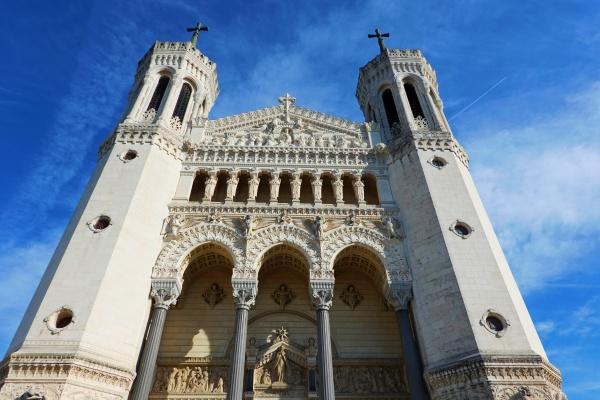
The Basilica of Notre‑Dame de Fourvière is one of those places that helps visitors understand Lyon right away. The view stretches across the rooftops, and the interior is full of color and detail. It’s one of those places where you naturally slow down, look up, and take a breath.
History
Construction began in the late 19th century, during a period when Lyon was expanding rapidly. The basilica was built as a symbol of gratitude after the city was spared from invasion, and its design blends Romanesque and Byzantine influences. Fourvière quickly became a place of pilgrimage, and it remains one of Lyon’s most visited sites today. The hill has been a spiritual location for centuries, long before the basilica existed, which adds another layer to the experience.
Facts about the Basilica of Notre‑Dame de Fourvière
1. The current basilica wasn’t the first sanctuary on the hill
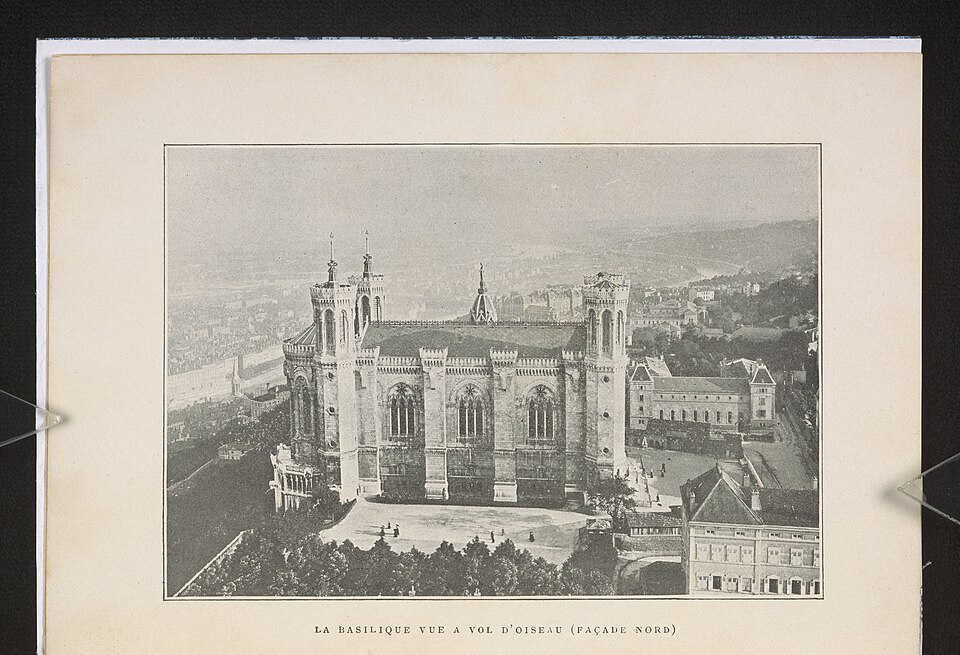
Before the 19th‑century basilica, Fourvière already had a 17th‑century chapel, and before that, a Roman forum. The hill has been a sacred site for nearly 2,000 years, long before the white towers appeared.
2. The interior decoration took decades longer than the building itself
Construction finished in 1896, but the mosaics, marbles, and gilded details weren’t completed until after World War II. Visitors today see a basilica that is visually “younger” than its structure.
3. You can walk inside the roof structure during the “visite insolite”
Unlike most churches, Fourvière lets visitors climb into the hidden upper galleries, cross narrow passages above the nave, and step onto the actual rooftop, right next to the archangel statue. It’s one of the most unusual church visits in France.
4. The basilica’s design was intentionally provocative for its time
Architect Pierre Bossan rejected the fashionable neo‑Gothic style and instead mixed Byzantine, Romanesque, and Eastern influences. Critics hated it at first. Some called it “a pastry cake”, but it became Lyon’s defining silhouette.
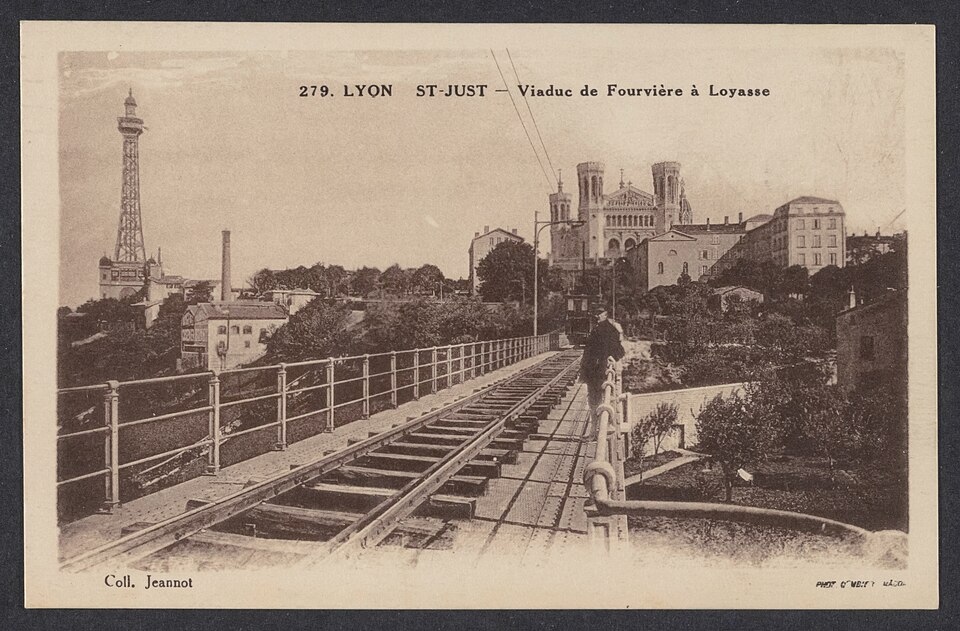
5. A historic tram once linked Fourvière to the Loyasse plateau
For much of the twentieth century, a small rack tram climbed the steep slope from Saint Jean to Fourvière and continued toward the Loyasse cemetery. It crossed a high viaduct that is now the Passerelle des Quatre Vents and offered one of the most impressive views in Lyon before the line was replaced by the modern funicular.
What to See
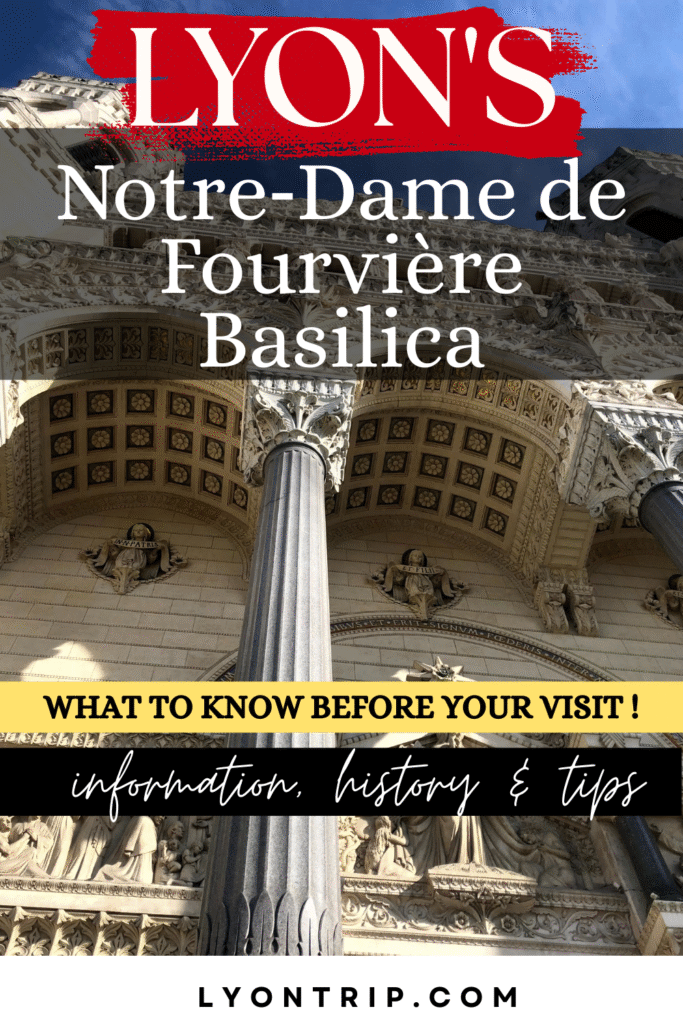
• The main sanctuary with its dramatic mosaics and soaring arches
• The crypt, a quieter and often overlooked space beneath the basilica
• The panoramic terrace with sweeping views over Lyon
• The gardens behind the basilica, offering a peaceful path toward the Roman theatres
• The nearby Roman theatres, only a short walk away and easy to combine with your visit
How to Get to the Basilica of Notre‑Dame de Fourvière
The easiest way up the hill is the funicular from Vieux Lyon. Take Funicular F2 from Vieux Lyon – Cathédrale Saint‑Jean to Fourvière.It runs frequently and drops visitors just a short walk from the basilica entrance.
The climb is steep, but the route through the gardens offers lovely views and a quieter approach. It’s a rewarding option if you enjoy a bit of a workout.
Driving is not recommended. Parking is limited, and the roads around the basilica are narrow.
How Long to Spend
Most visitors stay between 45 minutes and 1.5 hours, depending on whether they explore the gardens or continue on to the Roman theatres.
Practical Info
• Address: 8 Place de Fourvière, 69005 Lyon
• Entry: Free
• Opening Hours: Vary by season; generally open daily
• Website
• Tours: See website
• Nearby Sites: Roman theatres, Gallo‑Roman Museum, Vieux Lyon
Insider Tips
- The best viewpoint is slightly to the right of the main terrace, where the rooftops line up with the rivers.
- You can book paid tours to climb the rooftop of the basilica and explore the hidden spaces.
- The gardens behind the basilica are quieter in the morning and make a good route down toward the Roman theatres.
- The funicular can get busy on weekends; going up by funicular and walking down is a comfortable combination.
Have You Seen…
Found this post on Notre‑Dame de Fourvière Basilica helpful? Pin it now read it later.
Save or Share!