
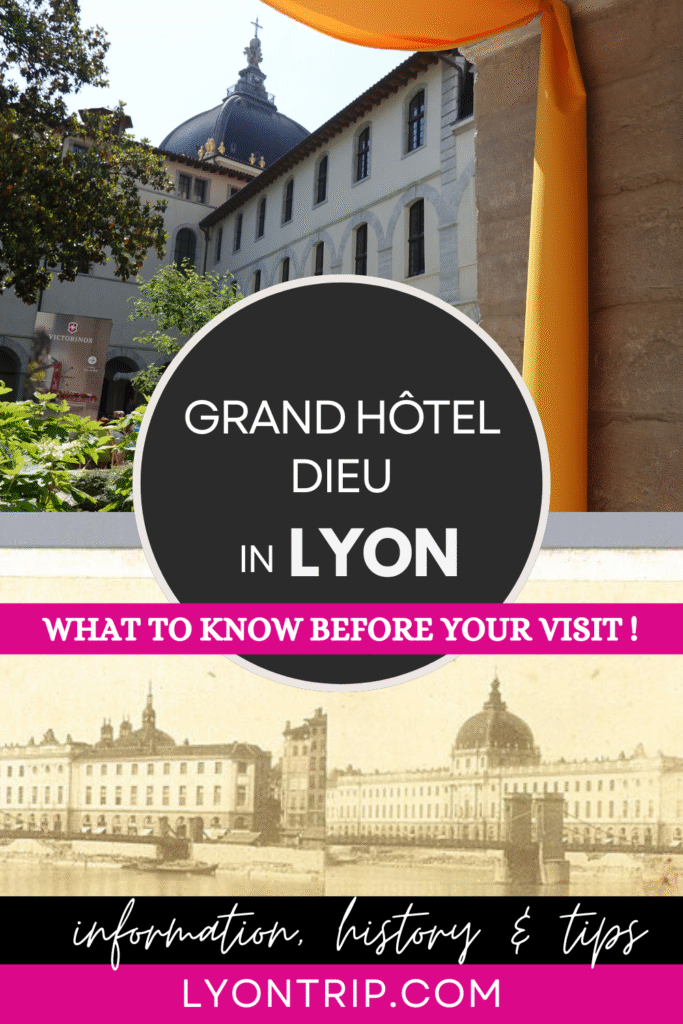
The Grand Hôtel‑Dieu is one of Lyon’s most recognizable buildings, now transformed into a mix of shops, restaurants, and peaceful courtyards. It’s simple to explore, right in the center, and an easy stop while exploring Lyon neighborhoods. It sits right alongside other Lyon historic buildings that are easy to visit.
History
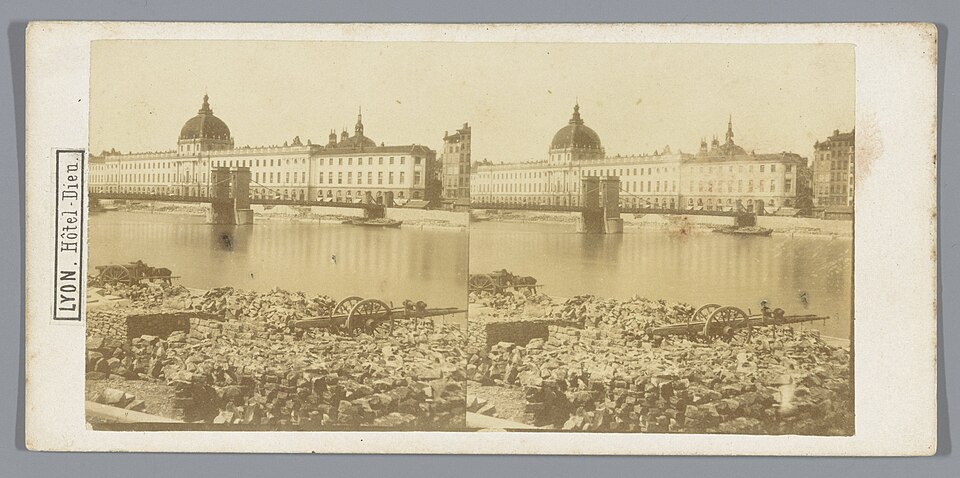
The Grand Hôtel‑Dieu began as a hospital in the 12th century and grew into one of the most important medical institutions in France. Over the centuries, the building expanded along the Rhône and became a landmark of Lyon’s riverside.
After the hospital closed in 2010, the site underwent a major restoration. The renovation preserved the courtyards and domes while adding a hotel, shops, cafés, and cultural spaces.
Facts about the Grand Hôtel Dieu
1. The hospital was originally founded by monks who built bridges
In the twelfth century, the Frères Pontifes created both the first wooden bridge over the Rhône and a small hospice beside it. Their mission was to help travellers cross the river safely and care for the poor and the sick. This modest refuge eventually became the Grand Hôtel Dieu.
2. François Rabelais worked here but was dismissed for repeated absences
The famous Renaissance writer served as a physician at the Hôtel Dieu in the 1530s. Although often celebrated as a brilliant doctor, he was removed from his post after only three years due to absenteeism.
3. The monumental dome is the work of Soufflot
The architect behind the Panthéon in Paris gave the building its elegant classical silhouette.
4. The hospital once kept a crocodile as a curiosity
Nineteenth century accounts mention a preserved crocodile displayed inside the building. It was brought back by a Lyonnais traveler and became a small local attraction, surprising visitors who did not expect to find an exotic animal in a hospital.
5. The renovation uncovered forgotten architectural details
During the twenty first century restoration, workers rediscovered blocked arches, hidden passages, and traces of earlier structures. These findings revealed how many layers of construction had accumulated over eight centuries of hospital life.
What to See
• The central dome and long façade along the Rhône
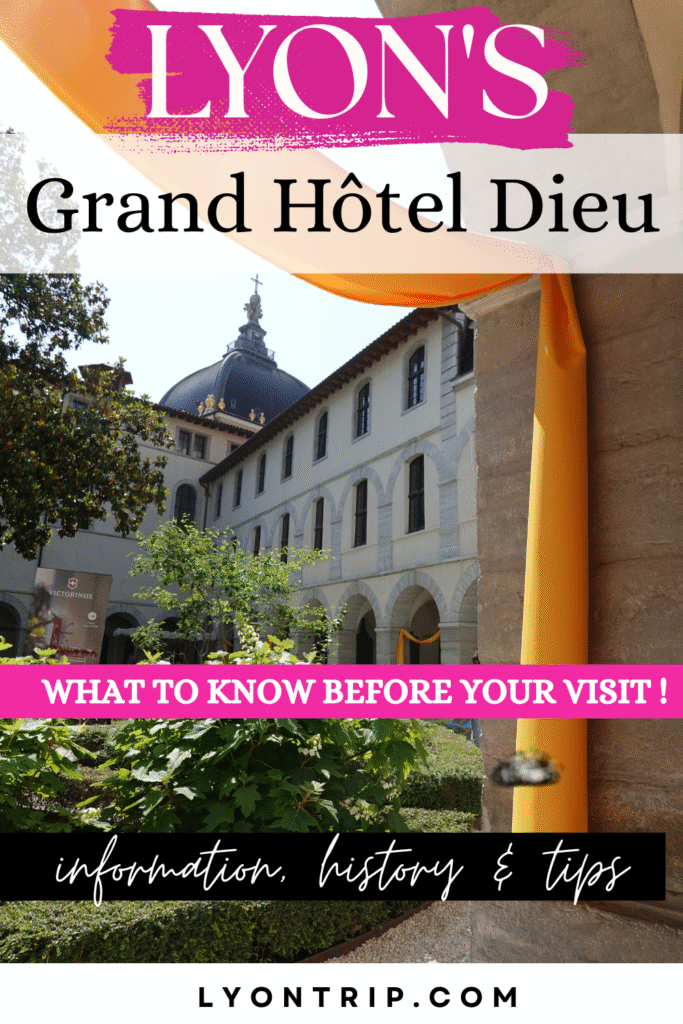
• The restored courtyards, each with a different atmosphere
• The interior passages lined with shops and cafés
• The Cité Internationale de la Gastronomie (if open during your visit)
• The riverfront promenade just steps away
This is part of what makes Lyon special. See my Lyon adventure guide for the complete picture.
Top tip: You’ll find some nice boutiques here, and I’ve mapped out even more in my Lyon shopping guide.
How to Get to Grand Hôtel‑Dieu
The building is in the heart of the Presqu’île and easy to reach by public transport. Take Metro A to Cordeliers or Bellecour, both a short walk away.
Walking from Place Bellecour or the Rhône riverbanks is simple and a straightforward walk.
How Long to Spend
Most visitors spend 30 minutes to 1 hour, depending on whether they stop for coffee, browse the shops, or explore the courtyards.
Practical Info
• Address: 1 Place de l’Hôpital, 69002 Lyon
• Entry: Free (public areas)
• Opening Hours: Shops and restaurants have individual hours
• Nearby Sites: Place Bellecour, Rhône riverbanks, Rue de la République
Planning a trip around this area? My Lyon hotel recommendations in the city center make it easy to choose.
Insider Tips
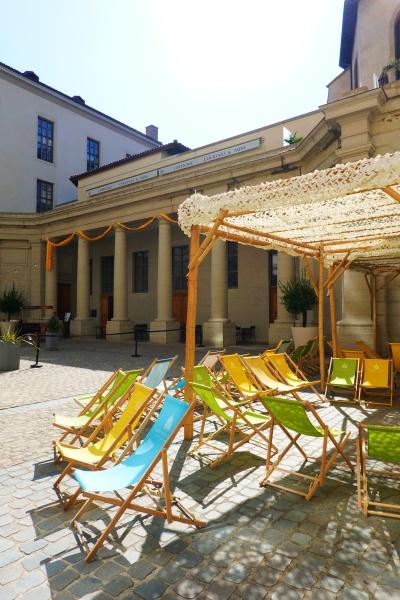
• The central courtyard is the quietest spot and a good place to take a break.
• There are typically chairs in the courtyard for visitors to relax, read, or enjoy their lunch
• Late afternoon light works well for photos of the dome.
• The passages stay cool in summer, making it a comfortable stop on hot days.
Have You Seen…
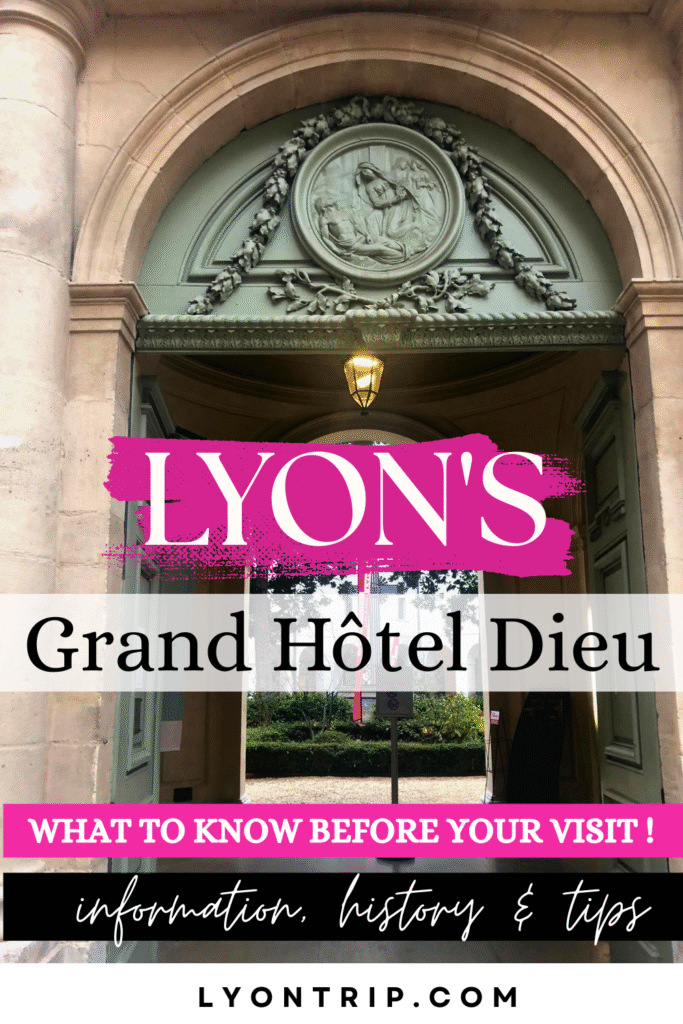
Found this post on Grand Hôtel Dieu helpful? Pin it now read it later.
Save or Share!