
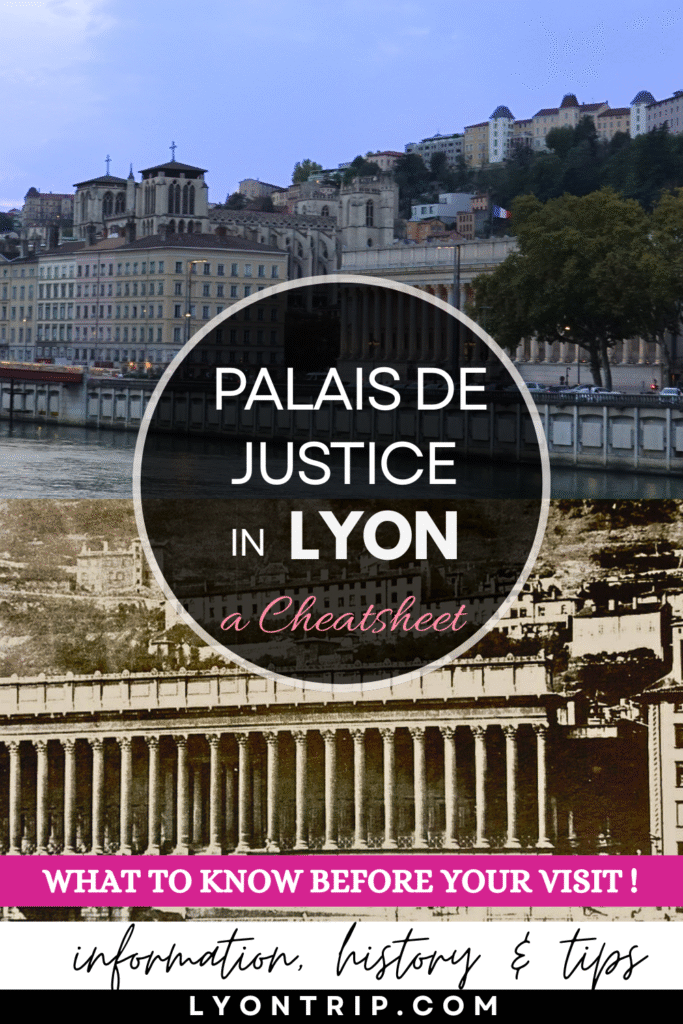
The Palais de Justice sits along the Saône river and is one of Lyon’s most photographed buildings. Its long row of columns gives it a distinctive classical appearance. The riverside location makes it an easy stop while exploring Vieux Lyon or crossing toward the Presqu’île.
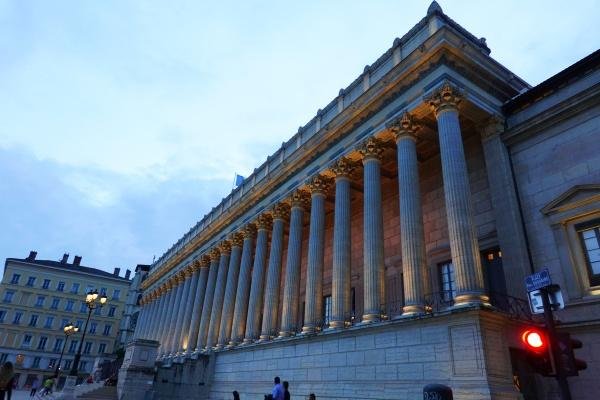
History
Built in the 19th century, the Palais de Justice replaced earlier judicial buildings on the same site. Its neoclassical design reflects the architectural style of the period, with 24 columns forming its iconic façade. The building has been the setting for several major trials in French history and remains an active courthouse today.
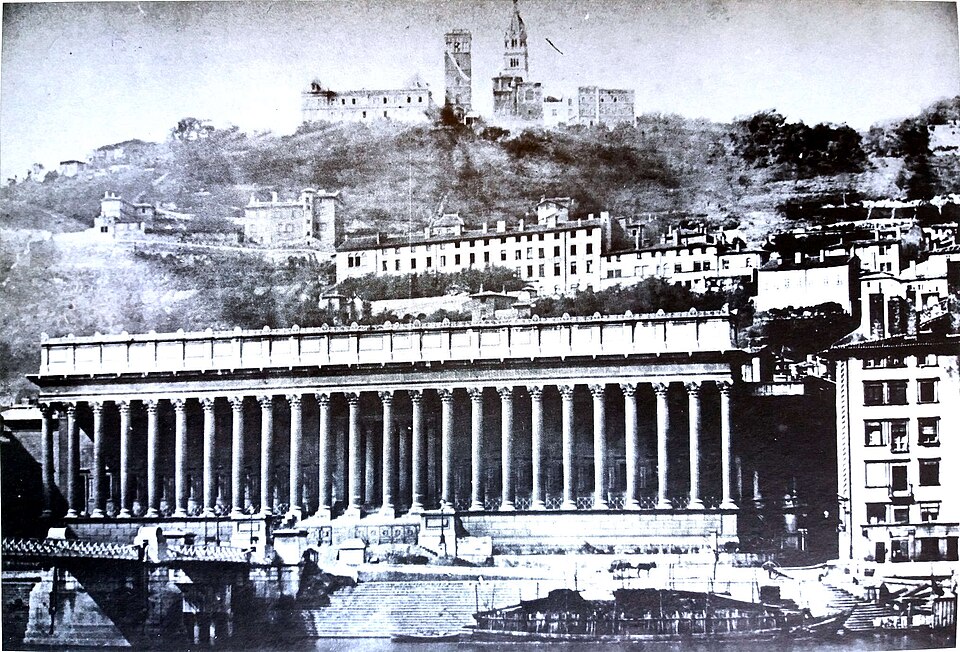
In 1945, Charles Maurras was brought to trial in Lyon for his support of the Vichy regime. A well‑known writer and political figure, he was brought before the city’s Cour de Justice to answer for his support of the Vichy regime. This took place during a period when France was holding collaborators accountable.
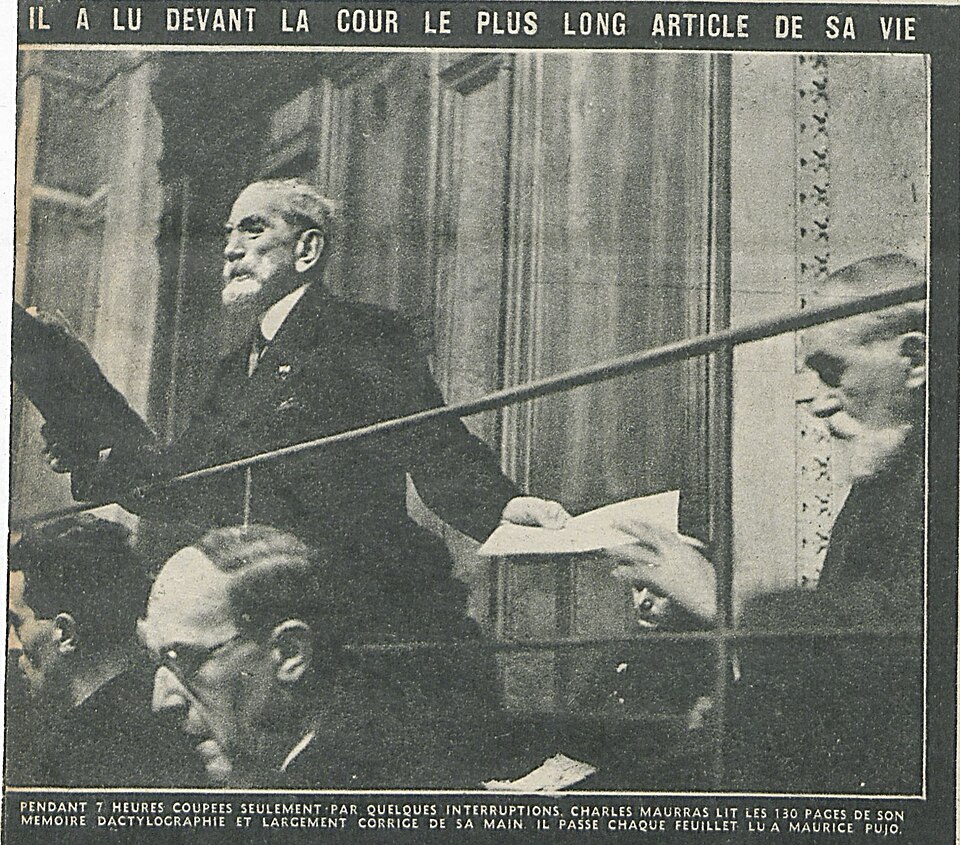
“For seven hours, interrupted only occasionally, Charles Maurras read the 130 pages of his typed and heavily hand‑corrected statement. He handed each page he finished reading to Maurice Pujo”.
Facts about the Palais de Justice of Lyon
1. It’s one of Lyon’s most iconic neoclassical buildings
Built in the 1830s by architect Louis‑Pierre Baltard, the façade with 24 Corinthian columns is why locals call it “les 24 colonnes.”
2. It served as Lyon’s main courthouse for nearly 170 years
From the 1830s until the early 2000s, major criminal trials were held here — including political, wartime, and high‑profile cases.
3. It hosted the Klaus Barbie trial in 1987
Klaus Barbie, known as the “Butcher of Lyon” for his role as head of the Gestapo in the city during World War II, was tried here in 1987.
It was the first major French trial for crimes against humanity, and it drew international attention.
4. The building is now used for ceremonial and historical purposes
Most judicial activity moved to the new Palais de Justice in Part‑Dieu, but the historic building remains a landmark and is still used for certain events and visits.
5. It stands on a site with judicial history going back to Roman times
The location near Vieux Lyon has been associated with justice and administration for centuries, long before the current building existed.

What to See
• The long colonnade facing the Saône
• The riverside promenade with views toward Fourvière
• The pedestrian bridge leading to the Presqu’île
• The illuminated façade at night
• The surrounding streets of Vieux Lyon
How to Get to the Palais de Justice
Take Metro D to Vieux Lyon – Cathédrale Saint‑Jean, then walk a few minutes toward the river.
Walking from the Presqu’île across the pedestrian bridge is simple and scenic.
Driving is not recommended due to limited parking.
How Long to Spend
Most visitors spend 10 to 20 minutes, unless they continue exploring the riverfront or Vieux Lyon.
Practical Info
• Address: Quai Romain Rolland, 69005 Lyon
• Entry: Exterior viewing only
• Opening Hours: Open at all times from the outside
• Tours: See optional tours
• Nearby Sites: Vieux Lyon, Saint‑Jean Cathedral, Saône riverbanks
Insider Tips
• The best photos are taken from the pedestrian bridge.
• Evening light works well on the columns.
• Combine the visit with a walk along the Saône.
• It’s a quick stop on the way between Vieux Lyon and the Presqu’île.
Found this post on Grand Hôtel Dieu helpful? Pin it now read it later.
Save or Share!