

Basilica of Notre Dame de Fourvière
The Basilica of Notre Dame de Fourvière was completed in the late nineteenth century and has become one of Lyon’s most important landmarks. The interior is quiet and filled with detailed mosaics, and the terraces around the basilica offer a clear view over the city and both rivers. It is a must place to start if you want to visit Lyon.
Roman Theatres of Fourvière
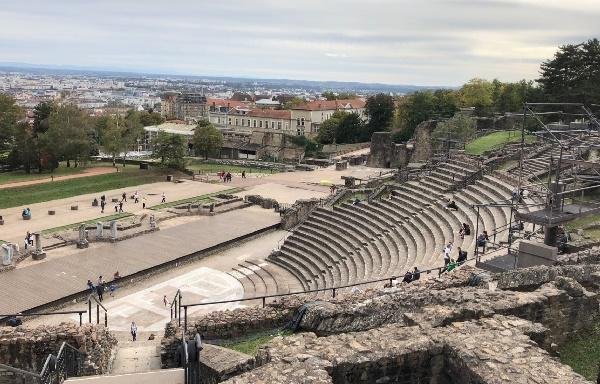
The Roman theatres on Fourvière Hill date back to the first century and show how early Lyon once gathered for performances and public life. The stone seating curves into the hillside, and the open setting makes it easy to picture the site in use.
Follow the paths through the terraces and pause at the top for a complete view of the theatre.

Grand Hôtel Dieu
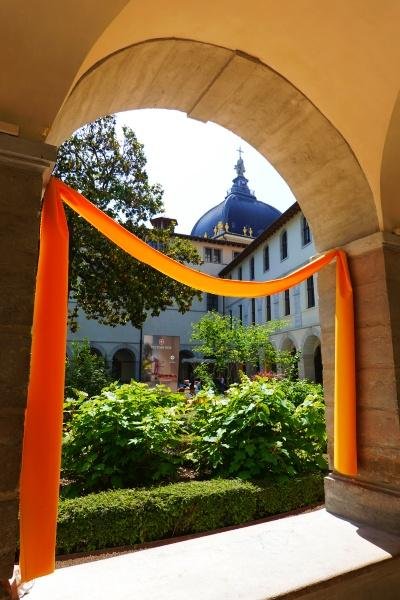
The Grand Hôtel Dieu began as a hospital in the twelfth century and later became one of Lyon’s most important medical institutions. Today, its long corridors, open courtyards and central dome now house a hotel, shops and restaurants.
Enter through one of the main doors and walk toward the central dome to see the building’s full scale.
Vieux Lyon and its Traboules
Vieux Lyon is known for its Renaissance buildings, narrow streets and hidden passageways. Its colorful façades and hidden traboules open into quiet courtyards that reveal the neighborhood’s long history. These traboules lead to small courtyards that show how the neighborhood once functioned. The area encourages slow exploration and rewards curiosity at every turn.


Saint Jean Cathedral
Saint Jean Cathedral began in the twelfth century and stands at the center of Vieux Lyon. The mix of Gothic and Romanesque elements gives the building a distinctive character, and the interior has a soft light that highlights the stone arches. The astronomical clock adds a thoughtful detail to the space.
Place Bellecour
Place Bellecour took shape in the seventeenth century and is now one of the largest open squares in Europe. The space feels bright and open, and the surrounding streets lead toward the riverbanks, shops and cafés. The view toward Fourvière Hill gives the square a clear sense of orientation. Cross the square and follow one of the side streets to reach the river or nearby shops.
Read more about Place Bellecour


Croix Rousse
Croix Rousse developed during the nineteenth century when silk workers lived and worked on the hill. The area has steep streets, stairways and open views over the city. Murals and small squares appear as you move through the neighborhood, giving you a direct look at its past. Climb one of the stairways for a clear view and follow a traboule to see how the area connects.
Place des Terreaux and the City Hall
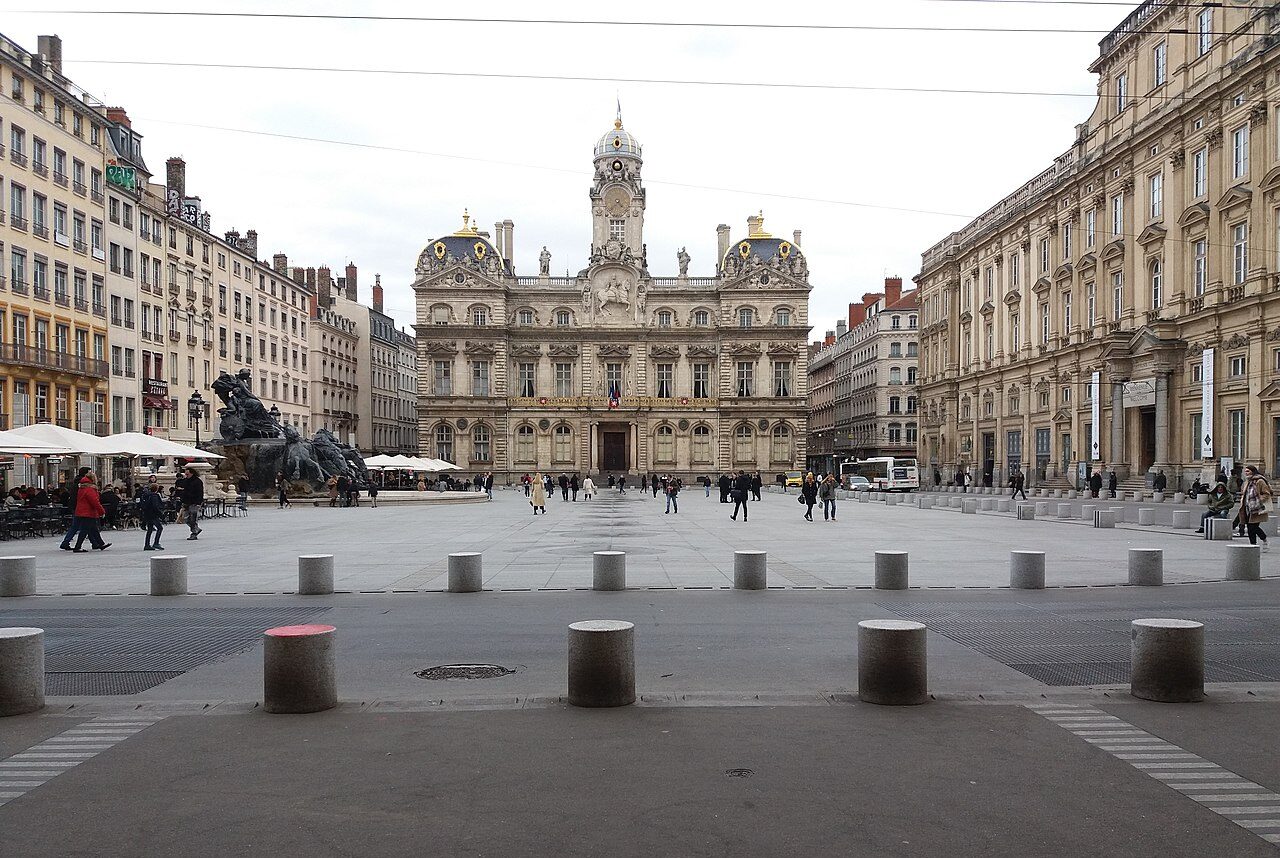
Place des Terreaux was laid out in the seventeenth century and is framed by the City Hall and the Bartholdi Fountain. The square has a clear layout and connects to several nearby museums and cafés. The surrounding buildings give the space a strong presence, especially in the evening when the lights come on.
Walk across the square to see the fountain from the front and take a moment to look up at the City Hall façade.
Read more about Place des Terreaux
Confluences Museum
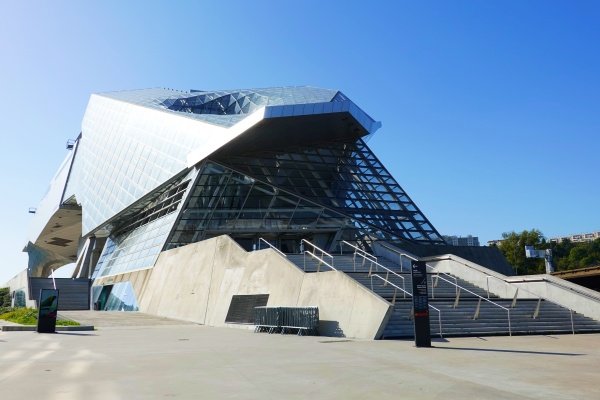
The Confluences Museum opened in 2014 and stands where the Rhône and Saône meet and is one of Lyon’s major modern buildings. Its glass and metal structure catches the light throughout the day, and the exhibitions cover science, culture and history in a clear and accessible way.
Opéra de Lyon
The Opéra de Lyon was built in the nineteenth century and later redesigned with its curved glass roof. The contrast between the two styles gives the opera house a distinctive presence. The square around the opera is open and easy to explore.
Read more about the Opéra de Lyon

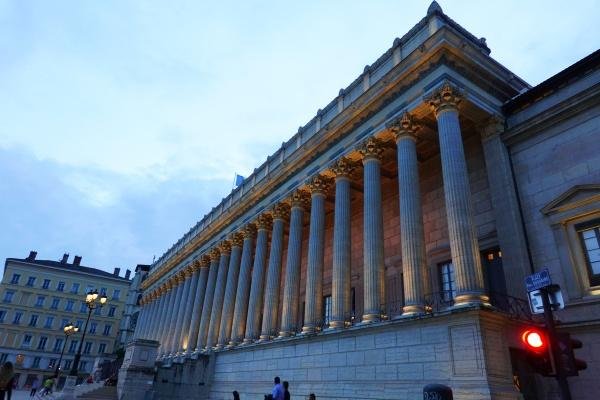
Palais de Justice
The Palais de Justice stands along the Saône and is known for its long row of classical columns. Cross the bridge for a clear view of the façade and walk along the river to see the building from different angles.