
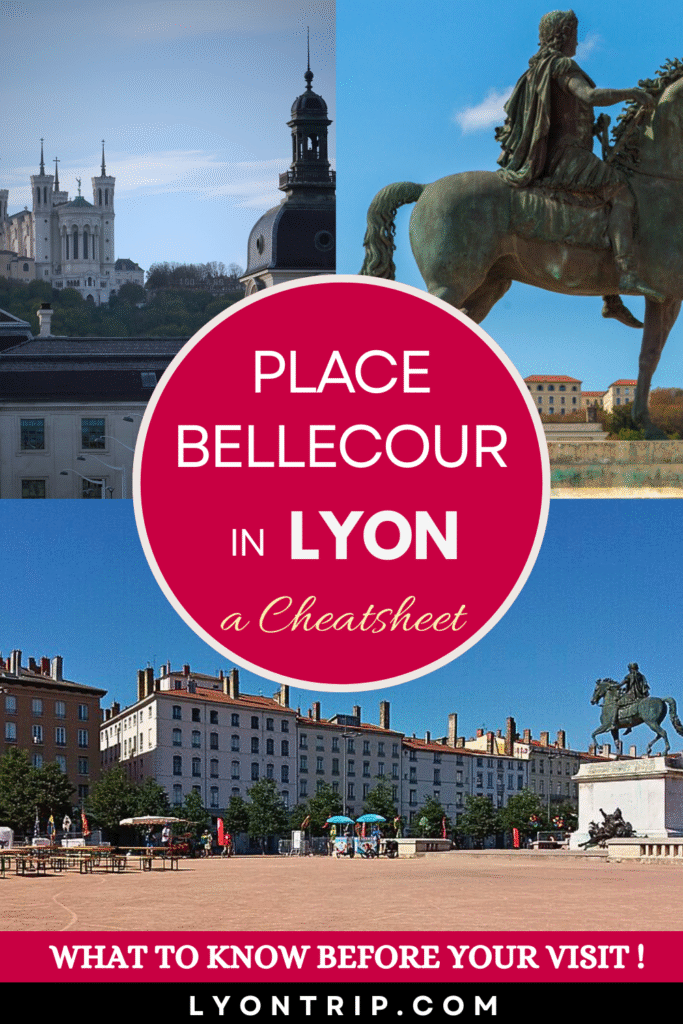
Place Bellecour is one of the largest open squares in Europe and a central meeting point in Lyon. It’s surrounded by shops, cafés, and major streets, making it a natural starting place for exploring the Presqu’île. The square is flat, open, and easy to navigate, with clear views toward Fourvière on one side and the shopping district on the other.
History
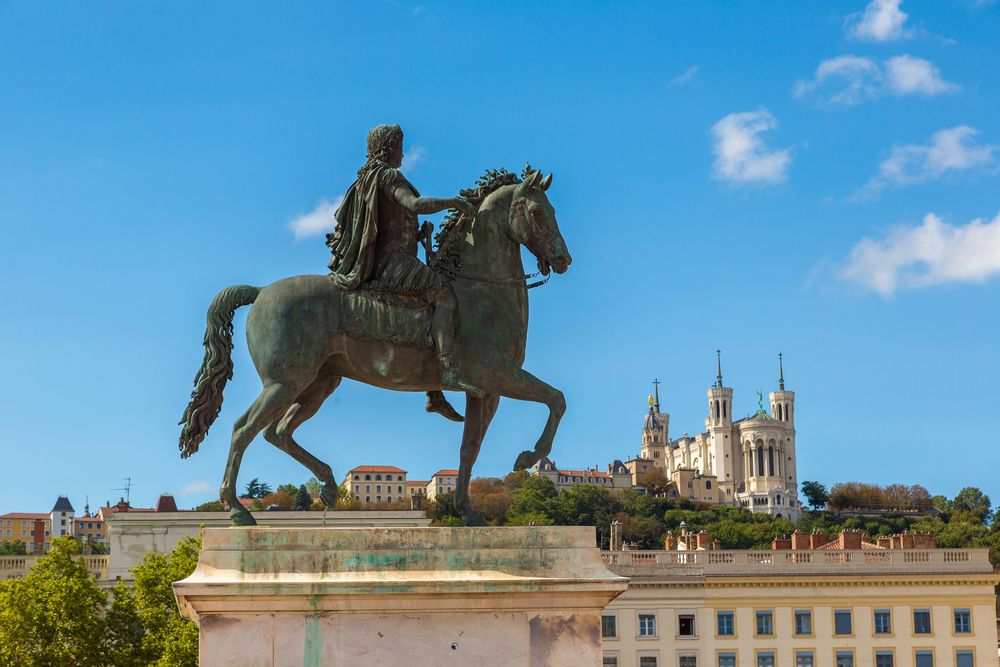
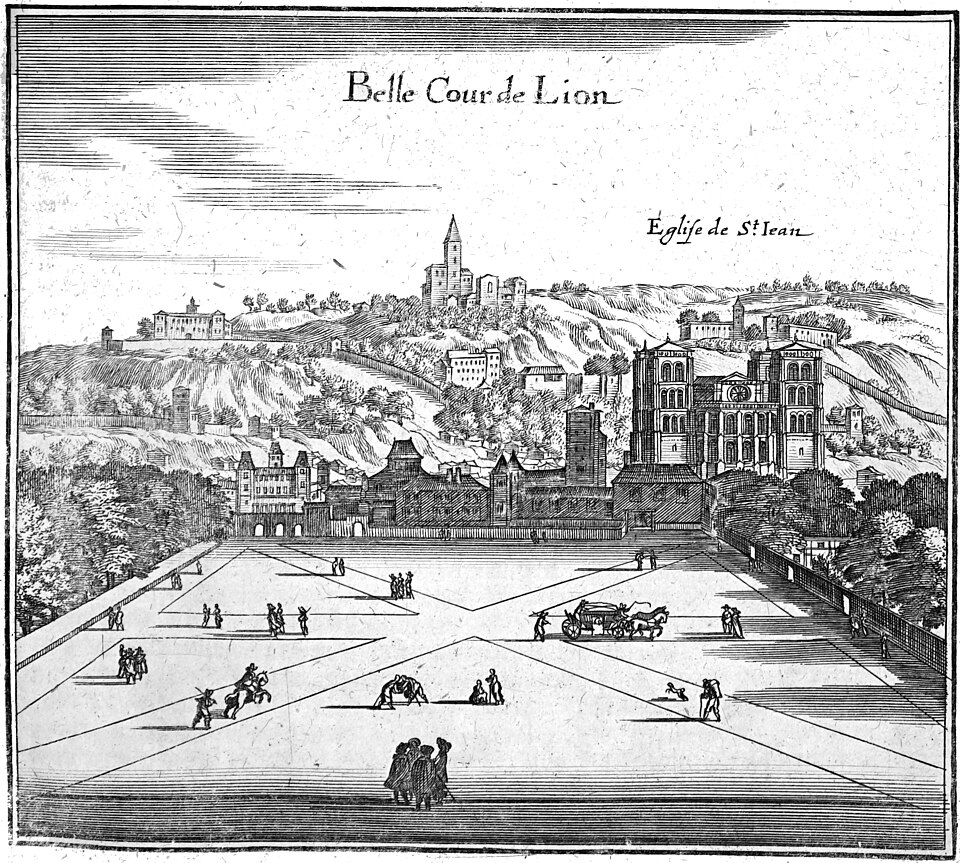
Place Bellecour has existed in various forms since the Middle Ages, but it took its current shape in the 17th century under Louis XIV. The equestrian statue in the center honors the king and has been replaced several times due to political changes. Over the years, the square has served as a parade ground, market space, and gathering point for major city events. Today, it remains one of Lyon’s most recognizable public spaces.
Facts about Place Bellecour
1. The square was once a royal hunting ground
Before becoming an urban space, the area was a sandy field used by the Archbishop of Lyon for hunting. The name Bellecour comes from the old expression Bella Curtis, meaning beautiful court or beautiful garden.
2. Louis the Fourteenth’s statue is not the original one
The first equestrian statue, created in the eighteenth century, was destroyed during the French Revolution. The current statue dates from 1825 and was sculpted by François Frédéric Lemot.
3. The square served as a military parade ground for centuries
Because of its size and central location, Bellecour was used for troop gatherings, royal entries, and public ceremonies. It remained a major military space until the nineteenth century.
4. A guillotine once stood on the square
During the Revolutionary period, Bellecour hosted a guillotine, making it one of the most politically charged places in Lyon at the time.
5. The red sand is a historical choice, not a modern design
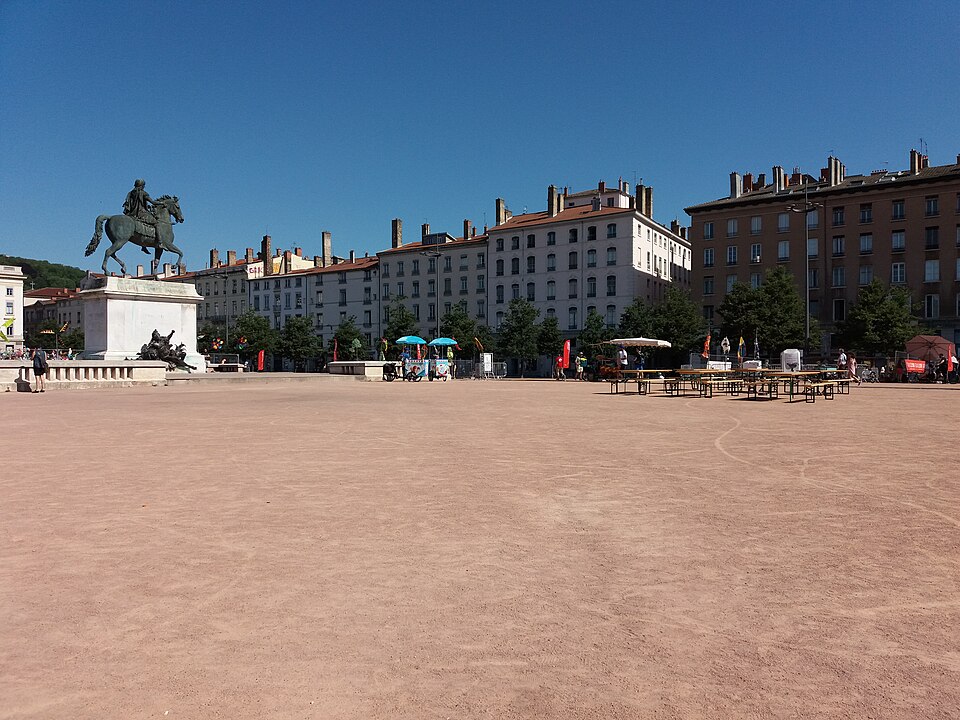
The distinctive red surface comes from a traditional mixture of clay and crushed brick used since the seventeenth century. It was chosen because it drained well and resisted heavy foot traffic.
What to See
• The statue of Louis XIV at the center of the square
• The Ferris wheel (seasonal)
• The long, open views toward Fourvière
• The surrounding streets leading to shops and restaurants
• The nearby Hôtel‑Dieu and Rhône riverbanks
How to Get to Place Bellecour
Place Bellecour is one of the easiest spots in Lyon to reach. Take Metro A or Metro D to Bellecour, which exits directly onto the square.
Walking from Rue de la République or the riverbanks is straightforward.
How Long to Spend
Most visitors spend 15 to 30 minutes at Place Bellecour, then stroll towards the shops and monments.
Practical Info
• Address: Place Bellecour, 69002 Lyon
• Entry: Free
• Opening Hours: Open at all times
• Tours: See optional tours
• Nearby Sites: Grand Hôtel‑Dieu, Rue de la République, Saône and Rhône riverbanks
Insider Tips
• The best photo of Fourvière from the square is taken from the western edge.
• Visit early in the morning for a less crowds.
• The square is a good starting point for exploring both riversides.
• Metro Bellecour is one of the best-connected stations in the city.
Have You Seen…
Found this post on Place Bellecour helpful? Pin it now read it later.
Save or Share!